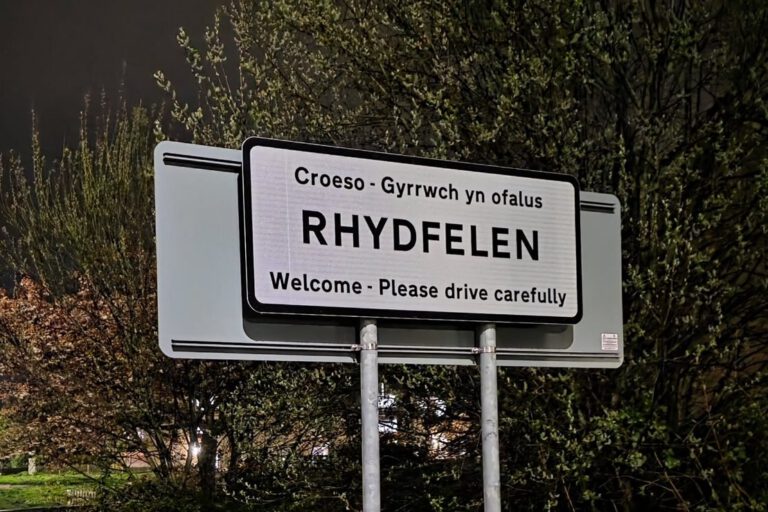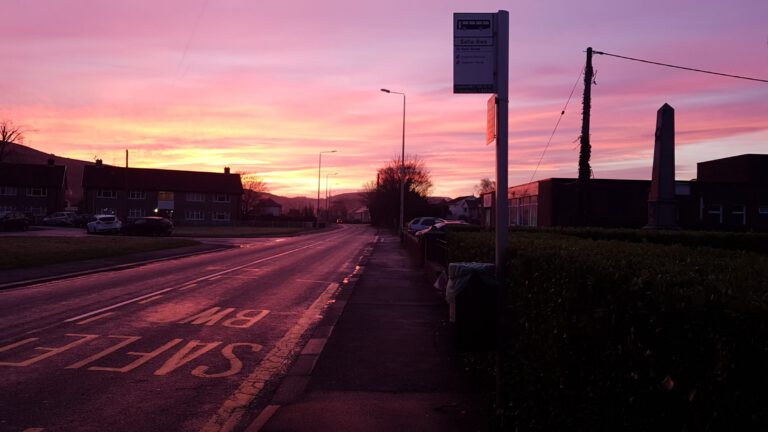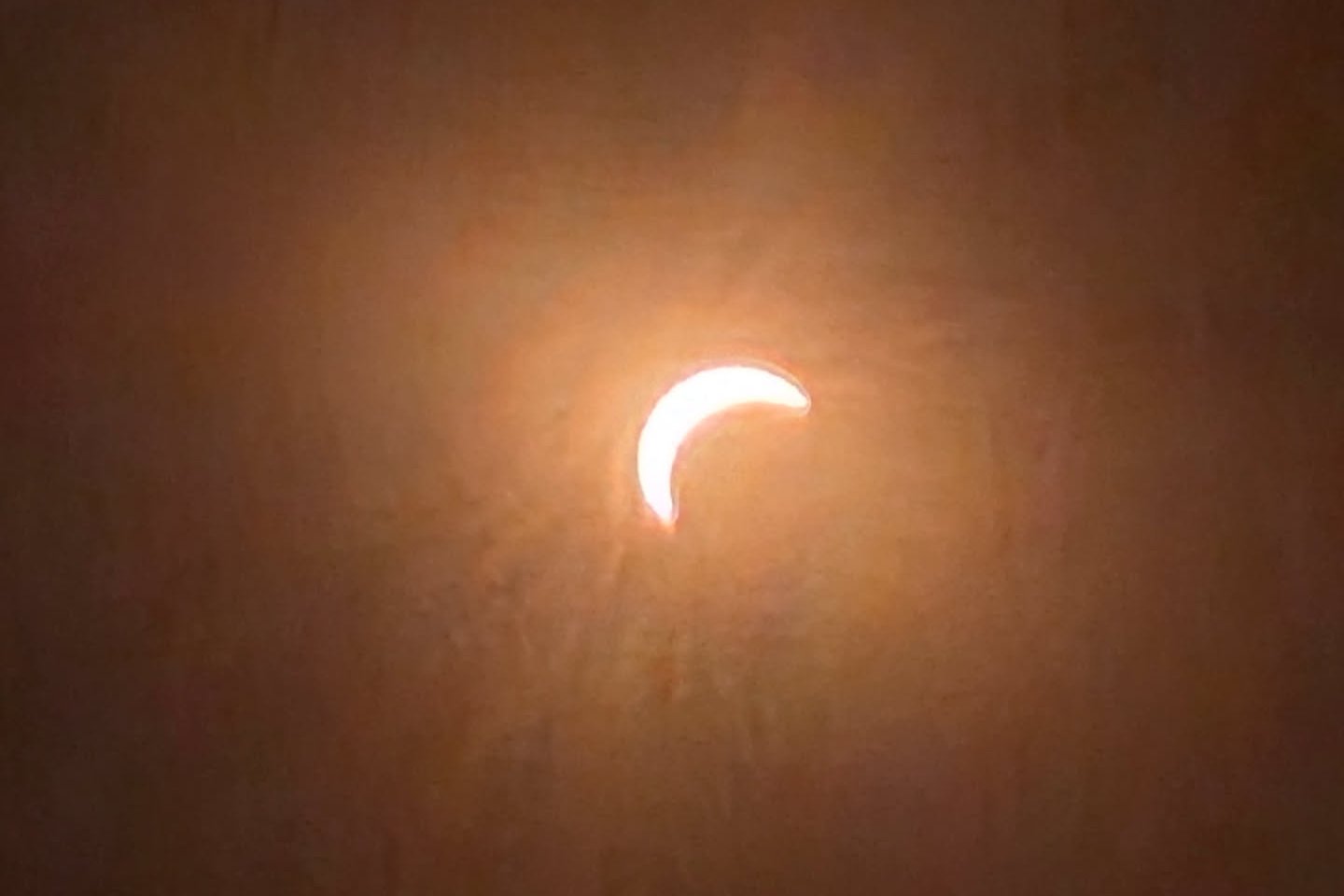
This evening the moon took a big bite out of the sun, and Rhydyfelin had a clear, sunny sky for it. It was the biggest solar eclipse seen from the UK since 1999.
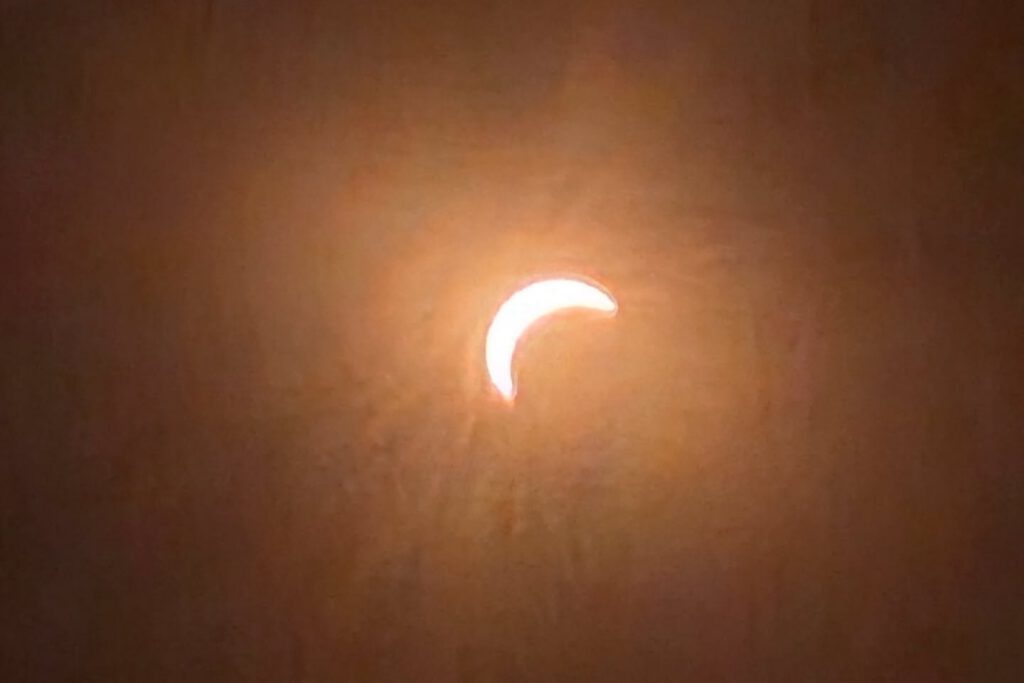
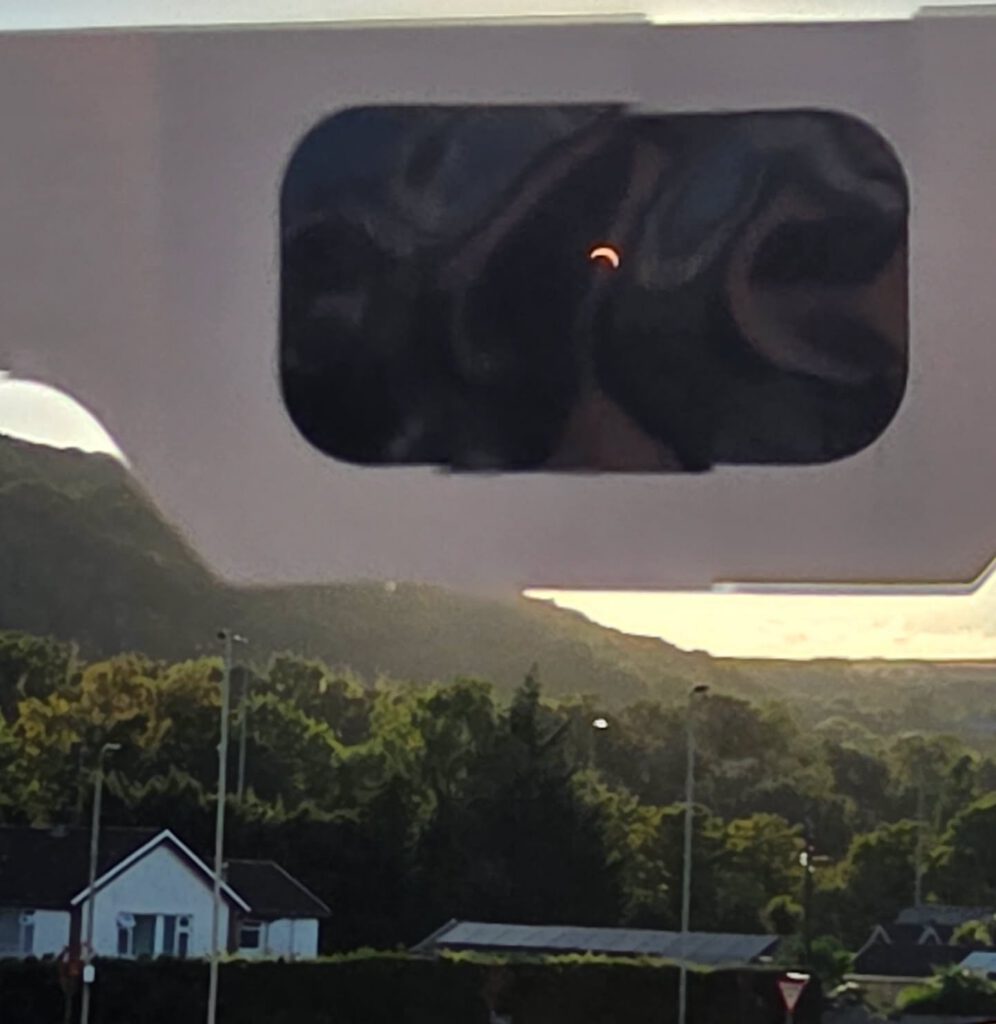
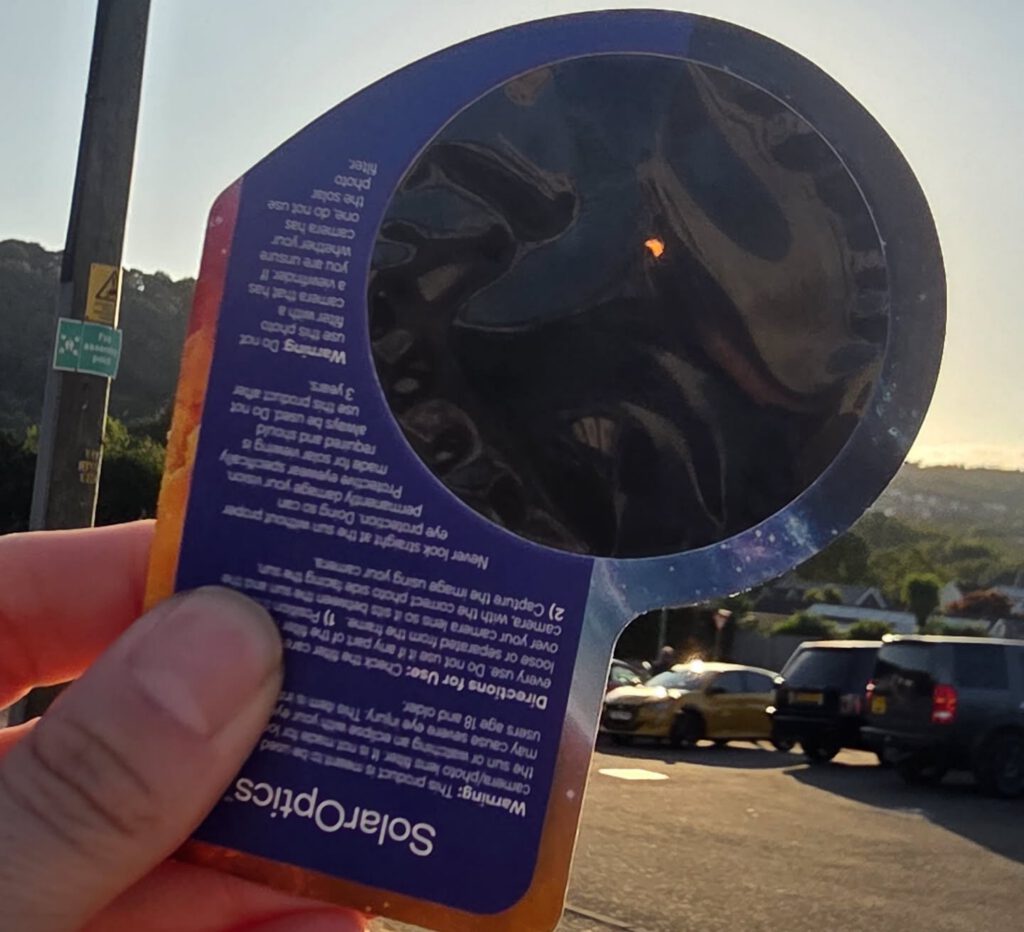
We took a few photos at 7.07pm, 7.14pm and 7.16pm, with the sun sitting low over the wooded hillside of the valley. We watched through card eclipse viewers with proper solar filters, and one close-up shows the sun cut down to a thin crescent.
How much of the sun was covered
Across the UK the moon covered roughly nine-tenths of the sun. The Royal Astronomical Society(opens in a new tab) put the figure for Cardiff at 93%, and Pembrokeshire and Cornwall did a little better still.
According to timeanddate.com(opens in a new tab), the times for Cardiff, just down the valley from us, were:
- Start: 6.16pm
- Maximum: 7.13pm
- End: 8.07pm
That means our 7.14pm photo was taken about a minute after the eclipse was at its deepest. Rhydyfelin is only a few miles away, so our times were near enough the same.
The sun didn’t set until 8.41pm in Cardiff, so the eclipse was over more than half an hour before sunset. It was low in the sky all evening, though, and in a valley like ours the hills can hide a low sun earlier than the official sunset time.
Where it was a total eclipse
Nowhere in the UK saw totality this time. The path of the total eclipse crossed Greenland and the western tip of Iceland, then ran across northern Spain to finish over the Balearic Islands. Iceland had the longest totality, at up to 2 minutes 18 seconds. It was the first total eclipse over mainland Europe in 27 years.
Watching safely
Even with most of the sun covered, it’s still bright enough to badly damage your eyes. The Royal Observatory Greenwich(opens in a new tab) and the Royal Astronomical Society both gave the same advice, and it’s worth keeping in mind for next time:
- Never look directly at the sun, with the naked eye or through a telescope, unless you have the right solar filter.
- Use eclipse glasses or viewers marked ISO 12312-2 (sometimes shown as ISO 12312-2:2015). Ordinary sunglasses are not safe.
- Throw away viewers that are scratched, creased or damaged.
- Try a pinhole projector instead. Make a small hole in one sheet of paper and let the sun shine through it onto a second sheet. A kitchen colander, or the gaps between leaves on a tree, will also throw little crescent suns onto the ground.
If you have eclipse viewers left over from tonight and they’re still in good condition, keep them somewhere safe for the next one.
When’s the next one?
You won’t have to wait long for another partial eclipse, but none will come close to tonight’s for a long time.
- Monday 2 August 2027: a morning partial eclipse. In Cardiff it runs from 9.01am to 10.56am, peaking at 9.57am, with the moon covering just over half the sun’s width. Southern Spain gets a total eclipse that day.
- Wednesday 26 January 2028: a partial eclipse late on a winter afternoon. It starts at 3.34pm in Cardiff and peaks around sunset, so you’d need a clear, low view of the horizon.
- 23 September 2090: the next total solar eclipse visible from the UK.
Did you catch it too? If you took photos in Rhydyfelin this evening, we’d love to see them.